January 26, 2024, by the Silverskin team
How to dress in layers in the mountains using the three-layer rule: the perfect technique for dressing for the mountains. Choose the right materials to tackle the winter cold
The three-layer rule: how to dress for the mountains
Let's discover how to choose mountain clothing according to the three-layer rule. Dressing in layers is the ideal solution to avoid feeling cold when going to the mountains in winter. Whether you are ski touring, downhill skiing, snowboarding, or snowshoeing, layering your clothing is important to enjoy your favorite winter sport while staying warm and dry, even when weather conditions are severe or change suddenly. But how do you dress in layers? What does dressing like an onion mean? Here is everything you need to know.
What is the three-layer rule
The three-layer rule is the strategic combination of three pieces of clothing, each of which serves a specific function. The three layers, or layers, are:
- the inner layer, or base layer, i.e., technical underwear;
- the intermediate layer, or mid layer;
- the outer layer, or outer layer, also known as the shell.
The first layer, the base layer, is used to wick sweat away from the skin and keep you dry; the second layer, the mid layer, ensures thermal insulation by preserving body heat; the third layer, or outer layer, serves a protective function against the elements, such as wind and rain.
How to dress in layers in the mountains according to this rule must take into account the temperatures you will face and the type of activity you are doing. For example, the choice of the second layer for mountaineering will be different from that for skiing and can range from a lightly padded jacket (softshell) to a lightweight fleece, depending also on the outer layer you will wear. One thing is certain: the three-layer rule is versatile and allows you to create a functional outfit for all winter sports, adjustable according to weather changes and intensity.

The inner layer
To dress in layers correctly, the choice of the inner layer, the one in direct contact with the skin, is crucial. Its main function is to keep the body dry and at a constant temperature; for this reason, it must ensure maximum breathability, to quickly wick sweat away from the skin so that it does not cool down, and be able to absorb moisture and provide thermal insulation.
Opting for a quality base layer is essential, as it allows you to regulate body temperature and keep your skin dry, the two fundamental conditions for comfort.
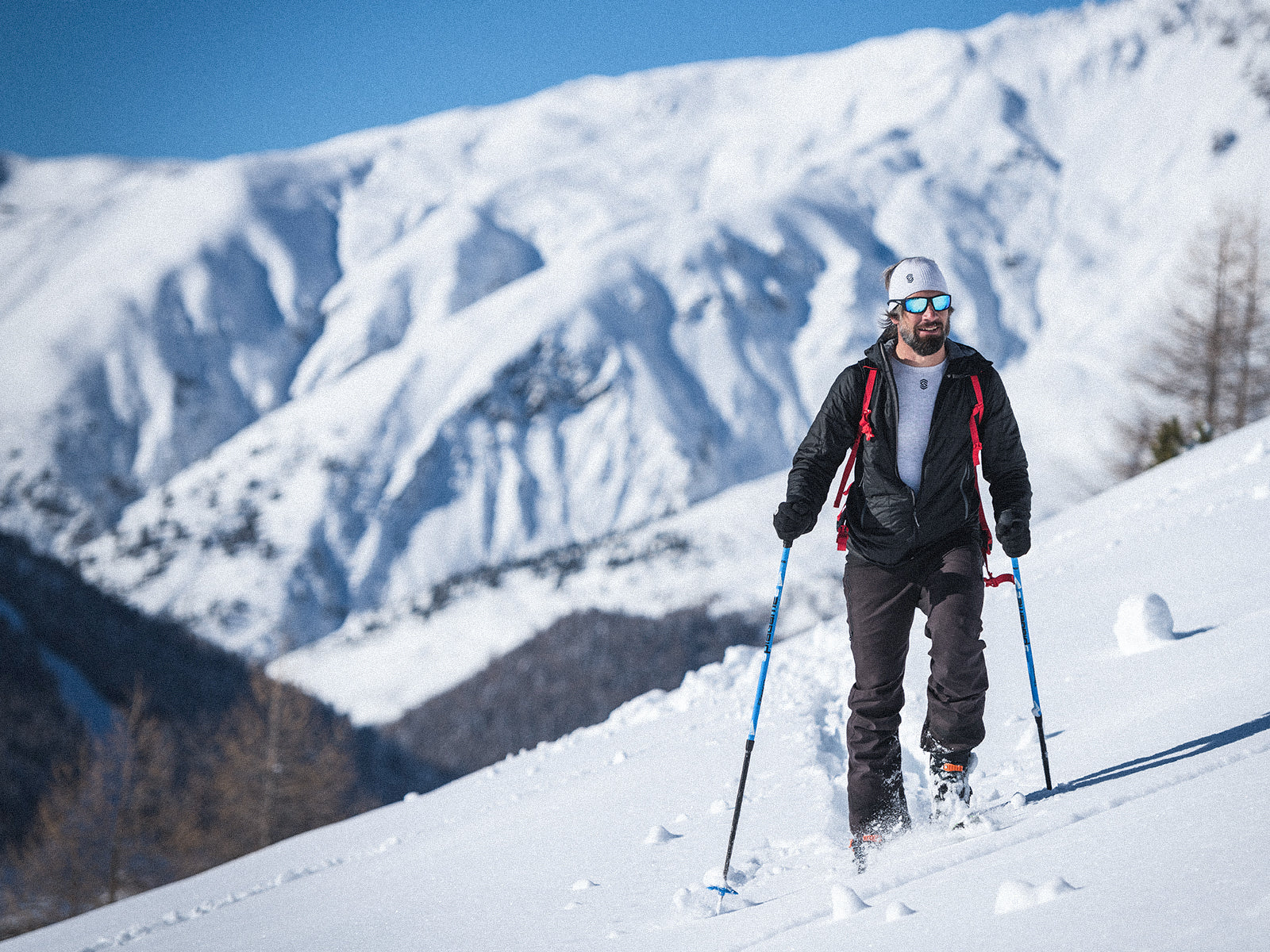
Let's look at some examples of how to dress in the mountains in winter, choosing the first layer depending on the activity you are doing. Those who love downhill skiing will need an inner layer capable of protecting from head to toe, ensuring comfort both while picking up speed on the slopes and on the ski lifts. One possible configuration is the total look of the Stay Warm collection, composed of a long-sleeved high-neck base layer paired with knee-length short leggings, gloves liners and socks. Those who ski tour, where the intensity is much higher, can instead opt for a lighter base layer, such as PRIMO Thermo Dry Pro, whose mesh fabric maximizes sweat evaporation. And for those who decide to go on a nighttime ski tour at high altitude, the Stay X-Warm collection, with its ability to dissipate heat more slowly, is the winning solution to avoid feeling cold.

The best materials for the inner layer
Designed to wick sweat away from the skin, base layers are usually made of breathable fabrics that can be made of natural, synthetic, or blended fibers. The best materials for the inner layer are:
- merino wool
- polypropylene
- polyester
Merino wool is a natural fiber known for its ability to absorb moisture and insulate even when wet, making it an ideal choice for unpredictable winter conditions. Polypropylene and polyester, on the other hand, are synthetic fibers that offer rapid sweat transfer to the upper layers, ensuring skin always stays dry.
Silverskin base layers are made with a yarn based on pure silver fibers blended with synthetic fibers. The hollow-fiber yarn, combined with the special manufacturing process, allows for a fabric that not only ensures maximum breathability but also stabilizes body temperature, acting as a barrier against cold or heat, depending on the season. Silverskin's yarn technology has revolutionized the technical underwear sector with a solution in which the presence of silver helps to maximize the performance of transporting excess body heat outwards and to counteract the formation of odors caused by bacterial proliferation.
Insulating mid layer to retain heat
The intermediate layer, or mid layer, is functional for thermal insulation. The second layer, especially in the mountains, must therefore retain the body heat generated by the base layer and use it to create a layer of warm air around the body. Materials such as microfiber fleece, thermal polyester, or synthetic insulators are often used for mid layers due to their characteristics of lightness and breathability. Since the sweat filtering through the inner layer will be transferred to the next one, the mid layer must also have excellent breathability characteristics.
But how do you choose the second layer for the mountains? It depends on the activity. The second layer for skiing can be a fleece jacket, but for those who ski tour, a lightweight insulating vest will be sufficient. For women's ski mid layers, who are more sensitive to the cold, a technical down jacket is instead recommended, capable of providing an extra amount of heat. Whatever the choice, you must avoid wearing a waterproof or windproof garment as a second layer in the mountains.
Outer layer: insulating and windproof
The outer layer, or outer layer, is the protective shield against the elements, reliable during descents as well as providing shelter from the freezing air at high altitude. Its main function is to protect from rain, snow, and wind, without creating a greenhouse effect.
Laminated fabrics with Gore-Tex or ePTFE membranes offer reliable protection without compromising on breathability, while DWR (Durable Water Repellent) coatings, heat-sealed seams, and waterproof zippers improve water resistance and prevent infiltration through vulnerable points. The ideal outer layer is also equipped with underarm or chest zip ventilation systems to allow for airflow adjustment.
Conclusion:
We have seen what the three layers are and their main functions, what the highest performing materials are, and some practical examples of how to dress in layers in the mountains.
In general, the key is to find the balance between the three layers based on the weather conditions, taking care to start with an efficient base layer, add mid layers based on the expected temperatures, and complete the layering with a durable and protective outer layer.
By carefully following the three-layer rule, you can face any winter challenge the mountains have in store, putting comfort and safety at the center of your experience. Whether you are a fan of skiing, snowboarding, or hiking, the winning formula is to dress like an onion to ensure optimal performance in every situation. Start dressing in layers for the mountains with the inner layer. Discover the advanced technology of Silverskin base layers, designed to tackle any winter challenge.
Explore our collections and discover all the features of our base layers to find the one that is right for you. Are you looking for an inner layer to go skiing? Discover the Stay Warm collection.