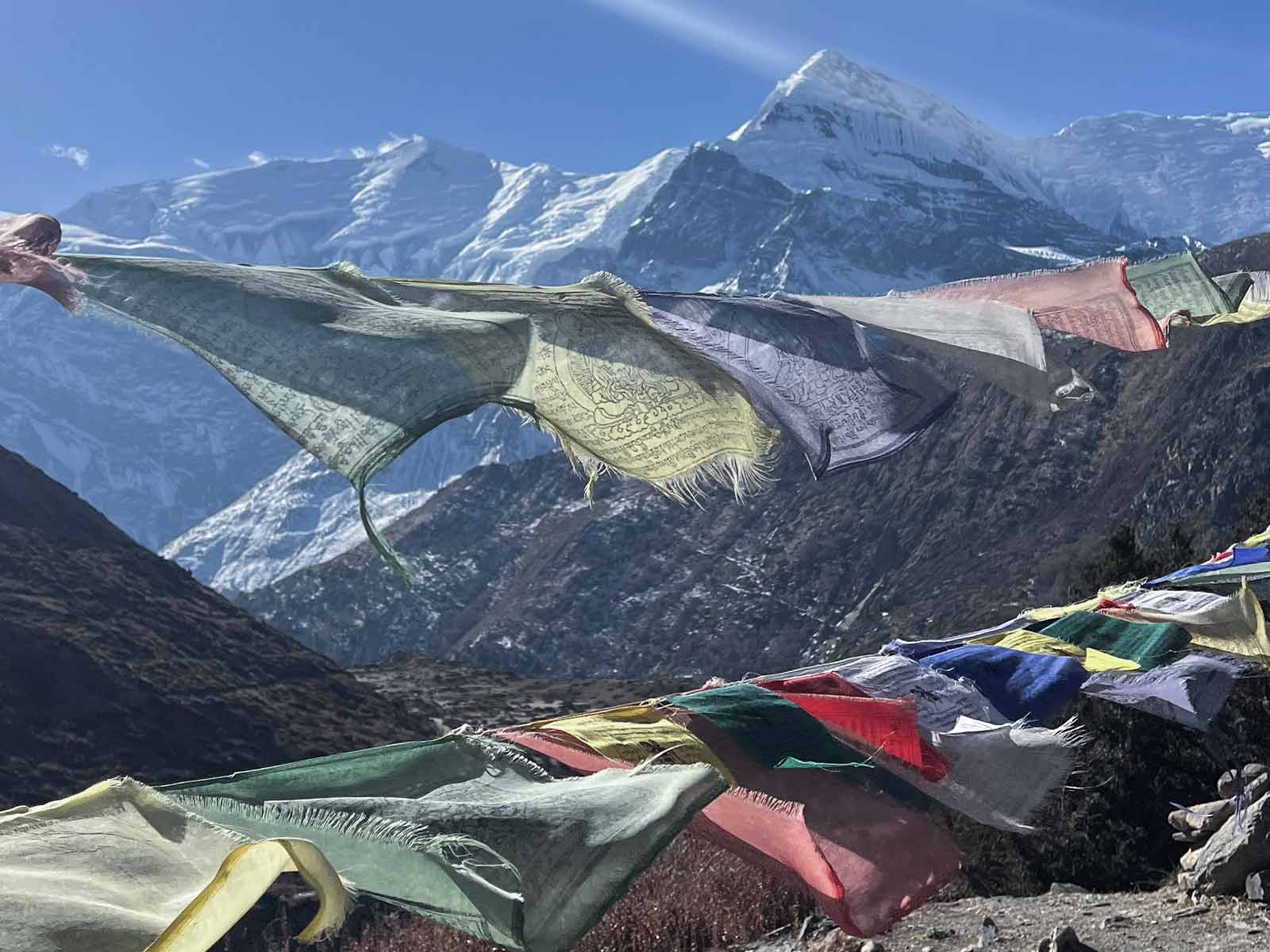
Day 6 – Tatopani - Naypaul 35 km 2000 d+
Day 6bis – Chame – Baudanda 45 km 800 d+
“I forgot to stop the GPS, can we redo it?”
Roberto, before being the victim of an attempted murder
When you do a race, there’s a finish line, and both before and during, all attention is on that final line. “Focus on the result.” How much further? I can do it! Hold on. You can do it.
A multi-day endurance event, like this trek, requires a more complex perspective than “reaching the end.” Sure, a good chunk of motivation is based on completing the challenge, but at the same time, this performance-driven obsession is accompanied by the guilt of someone who is aware that they are experiencing special places, situations, and people, which, after returning to their usual routine, will fade into a nostalgic haze of memories.
The last day is when this contradiction is strongest. “Come on, we’re almost there!” versus “It’s all about to end.”
Roberto and Alessio set off feeling bold, with 2000 meters of elevation gain to cover on their way back, via steps in the tropical forest, above 3000 meters. They are riding an adrenaline high from having overcome a challenge they didn’t feel ready for. Alessio is a bit drained, feeling that his project is almost complete and that the charge of stress has taken a day off today.
It finally gets warm. They are back to dressing in t-shirts and shorts and not chattering their teeth at every stop. Roby stops motivating his companions and speeds up for no reason. Michele follows in his shadow. Alessio curses and asks for food stops. It’s lunchtime when they crest the 2832 m of Ghorepani. The last real difficulty.
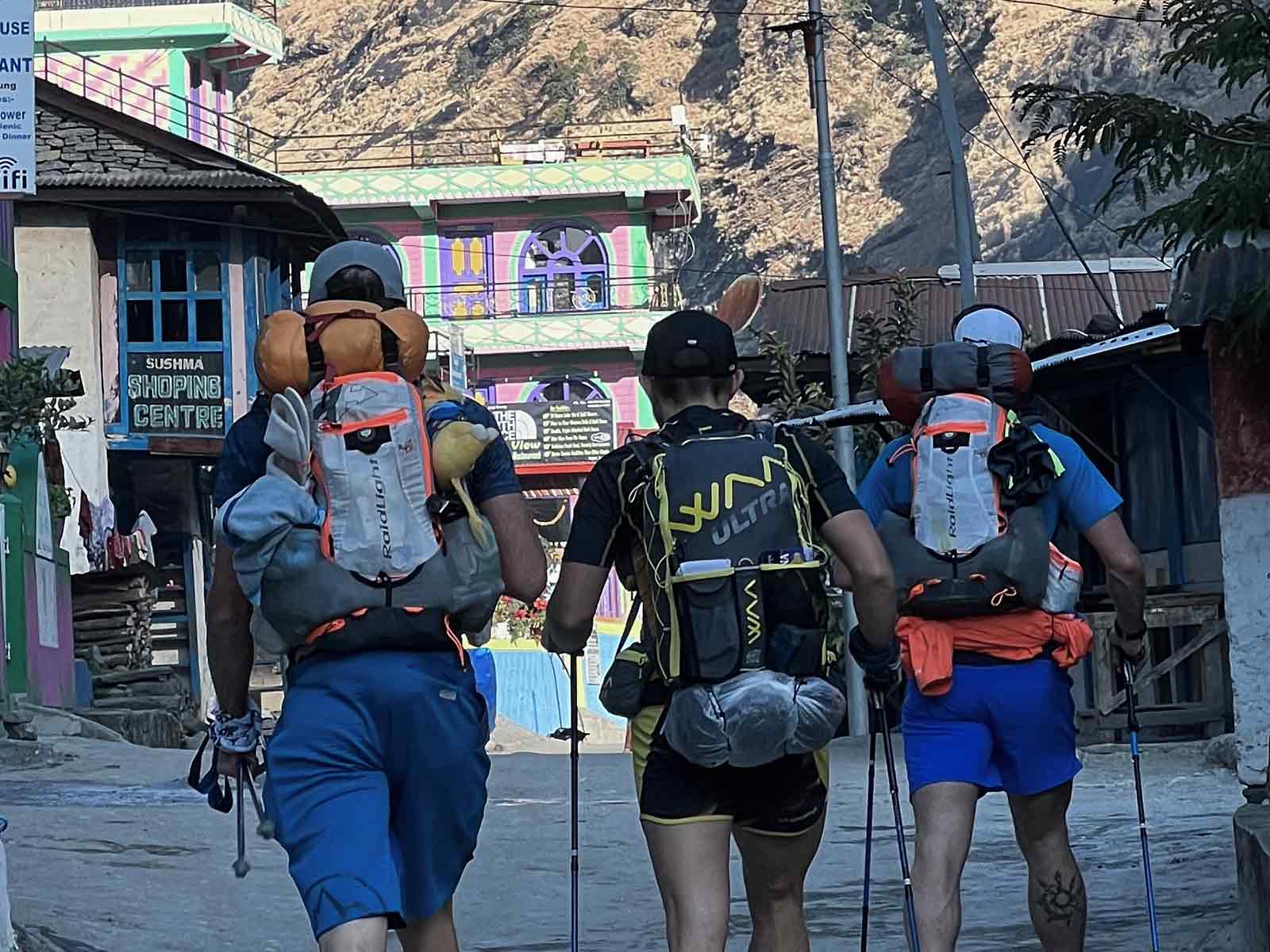
It’s a first taste of returning to civilization. Even out of season, tourists and villages abound. It only took five days to make this situation feel strange and uncomfortable. They will miss all of this very much.
The descent continues as slowly as the ascent. After 220 km, the kinetically determining factor is the cartilage in the joints and the fear of sprains in the hips, ankles, knees, and anything else that is a bit worn out from all this running/walking.
At sunset on one of the first Mondays of the year, after saying goodbye to the last steep steps, the last Tibetan bridge, and the last beautiful peaks, the three survivors of the Annapurna group reach an anonymous little shack, excited and exhausted. It’s the last checkpoint of the Trekking. A stamp on the permits bought in Kathmandu seven days earlier and an emotional exclamation:
“We did it in six days!”
They call Francesco and Camilla. They tell anecdotes and references that can only make the five of them laugh. Jokes and lightness. On the other side, similar comments arrive. Francesco and Camilla have also reached the bottom of the valley from the other side, overcoming the influences and enjoying the trek at a forced slower pace. It’s made for everyone. And now they can’t wait to get together to tell each other everything that happened. Because 75% of a trip consists of smashing other people’s boxes with enthusiastic stories.
RETURN TO NORMALITY
It’s a long process that brings them back to a more real, but less true world.
There’s an eternal journey between the car and the plane because doing 160 km in Nepal is an adventure. There’s the first hot shower and the first clean clothes.
There’s the embarrassment of seeing the same people from two seconds ago, but washed and therefore unrecognizable.
There’s the moment of panic when opening emails after 8 days of being unreachable.
There’s the second hot shower because the first one was too exciting and they didn’t enjoy it.
There’s the dinner together where they order everything on the menu that isn’t rice.
There’s a beer at the bar to tell each other absolutely everything, realizing that after six days of trekking and dehydration, a quarter of a can of beer is enough to feel thoroughly drunk.
There’s the post on facebook/instagram/Focus junior where they brag to the world about having done something so cool.
There’s the 4 a.m. alarm to catch the flight because planning always lives on exaggerated optimism.
There’s the hotel breakfast prepared with more seriousness than the pre-trekking backpack.
There’s another twelve-hour journey where they watch movies on board about the Himalayas.
There’s the landing and the request to the first taxi driver for the nearest pizzeria.
There’s the jet-lag and the shock of a completely different temperature. For once, January at home seems warm. Especially inside the house.
There’s the routine that starts again and time that starts flowing fast again. But it’s all tasteless, flavorless, meaningless. Productivity is zero.
There are many sighs thinking about the beautiful mountains.
There’s already the desire to do such an experience again.
Who knows what the next one will be.